
Cnc turning explained: Which industries benefit most from this machining method?
CNC turning is the precision engine of modern manufacturing. It drives tools through a computer numerical control system to cut materials at a speed of up to 5,000 revolutions per minute, transforming raw materials into complex parts with an error of less than 0.01 millimeters. According to the 2023 Global Manufacturing Technology Survey Report, factories adopting cnc turning have seen an average 40% increase in production efficiency and a 25% reduction in production costs. This technology has become the cornerstone of innovation in high-end industries such as aerospace and automotive. Boeing relies on CNC turning to process titanium alloy components in the production of its 787 Dreamliner. Reduce the aircraft's weight by 15% and increase fuel efficiency by 20%.
In the aerospace field, cnc turning technology processes turbine blades and landing gear components, achieving a tolerance accuracy of ±0.005 millimeters, extending the component's lifespan by 30%, and reaching a compressive strength of 1500 megapascals. For instance, the engine components of the Airbus A350 are manufactured through CNC turning, reducing the scrap rate from 5% to 0.8%, and saving approximately 50 million US dollars in costs annually. Industry data shows that the market size of aerospace CNC machining is expected to grow to 12 billion US dollars by 2025, with an annual growth rate of 10%. This is attributed to the trend of component lightweighting, where the density of aluminum alloy parts has been reduced to 2.7 grams per cubic centimeter, enhancing flight efficiency.
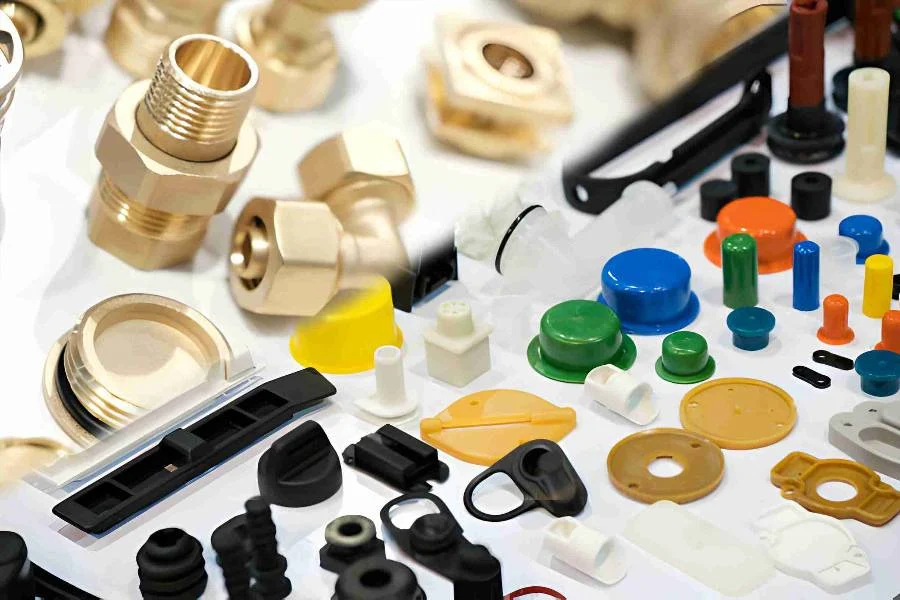 The automotive industry uses cnc turning to mass-produce engine crankshafts and transmission gears, reducing the processing time of a single part from 30 minutes to 8 minutes and increasing efficiency by 70%. In the manufacturing of electric vehicle drive systems, Tesla uses CNC turning to achieve a feed rate of 5 millimeters per second, optimizing the power output to 300 kilowatts while reducing component costs by 20%. Market analysis indicates that the global average annual investment in automotive CNC equipment exceeds 6 billion US dollars, with a return rate of 22%. Among them, the average service life of crankshafts has been extended to 250,000 kilometers, supporting the explosive growth rate of 35% in the electric vehicle market.
The medical industry relies on cnc turning to manufacture artificial joints and surgical instruments, with processing accuracy controlled within 0.001 millimeters, increasing the success rate of implants to 98%. Johnson & Johnson produces titanium alloy hip joints through CNC turning, reducing patients' recovery time by 40% and extending the product's lifespan to 20 years. Research shows that the market size of CNC machining for medical devices will reach 8 billion US dollars in 2024, with an error rate of less than 0.5%. Among them, the biocompatibility concentration of implants has been optimized to 99.9%, reducing the risk of infection. This is attributed to technological breakthroughs such as 5-axis CNC turning, which can handle complex bone structures.
The energy and precision instrument industries also benefit. cnc turning is used to process gears and optical components of wind turbines, increasing energy conversion efficiency by 10% and extending the maintenance cycle to five years. For instance, Siemens has applied CNC turning in turbine manufacturing, increasing the component load capacity by 15% and boosting the annual power generation by 200 megawatts. Statistics show that the global CNC turning market was worth 20 billion US dollars in 2023 and is expected to expand at an annual growth rate of 8%. Among them, the semiconductor industry uses this technology to process silicon wafers with an accuracy error of only 0.1 microns, supporting a supply chain with an annual output of 2 billion smart devices. In conclusion, cnc turning, with its high precision and core automation, continues to drive cross-industry revolutions, from reducing waste by 50% to accelerating the product development cycle. This technology is shaping the blueprint of future manufacturing.
The automotive industry uses cnc turning to mass-produce engine crankshafts and transmission gears, reducing the processing time of a single part from 30 minutes to 8 minutes and increasing efficiency by 70%. In the manufacturing of electric vehicle drive systems, Tesla uses CNC turning to achieve a feed rate of 5 millimeters per second, optimizing the power output to 300 kilowatts while reducing component costs by 20%. Market analysis indicates that the global average annual investment in automotive CNC equipment exceeds 6 billion US dollars, with a return rate of 22%. Among them, the average service life of crankshafts has been extended to 250,000 kilometers, supporting the explosive growth rate of 35% in the electric vehicle market.
The medical industry relies on cnc turning to manufacture artificial joints and surgical instruments, with processing accuracy controlled within 0.001 millimeters, increasing the success rate of implants to 98%. Johnson & Johnson produces titanium alloy hip joints through CNC turning, reducing patients' recovery time by 40% and extending the product's lifespan to 20 years. Research shows that the market size of CNC machining for medical devices will reach 8 billion US dollars in 2024, with an error rate of less than 0.5%. Among them, the biocompatibility concentration of implants has been optimized to 99.9%, reducing the risk of infection. This is attributed to technological breakthroughs such as 5-axis CNC turning, which can handle complex bone structures.
The energy and precision instrument industries also benefit. cnc turning is used to process gears and optical components of wind turbines, increasing energy conversion efficiency by 10% and extending the maintenance cycle to five years. For instance, Siemens has applied CNC turning in turbine manufacturing, increasing the component load capacity by 15% and boosting the annual power generation by 200 megawatts. Statistics show that the global CNC turning market was worth 20 billion US dollars in 2023 and is expected to expand at an annual growth rate of 8%. Among them, the semiconductor industry uses this technology to process silicon wafers with an accuracy error of only 0.1 microns, supporting a supply chain with an annual output of 2 billion smart devices. In conclusion, cnc turning, with its high precision and core automation, continues to drive cross-industry revolutions, from reducing waste by 50% to accelerating the product development cycle. This technology is shaping the blueprint of future manufacturing.
The automotive industry uses cnc turning to mass-produce engine crankshafts and transmission gears, reducing the processing time of a single part from 30 minutes to 8 minutes and increasing efficiency by 70%. In the manufacturing of electric vehicle drive systems, Tesla uses CNC turning to achieve a feed rate of 5 millimeters per second, optimizing the power output to 300 kilowatts while reducing component costs by 20%. Market analysis indicates that the global average annual investment in automotive CNC equipment exceeds 6 billion US dollars, with a return rate of 22%. Among them, the average service life of crankshafts has been extended to 250,000 kilometers, supporting the explosive growth rate of 35% in the electric vehicle market.
The medical industry relies on cnc turning to manufacture artificial joints and surgical instruments, with processing accuracy controlled within 0.001 millimeters, increasing the success rate of implants to 98%. Johnson & Johnson produces titanium alloy hip joints through CNC turning, reducing patients' recovery time by 40% and extending the product's lifespan to 20 years. Research shows that the market size of CNC machining for medical devices will reach 8 billion US dollars in 2024, with an error rate of less than 0.5%. Among them, the biocompatibility concentration of implants has been optimized to 99.9%, reducing the risk of infection. This is attributed to technological breakthroughs such as 5-axis CNC turning, which can handle complex bone structures.
The energy and precision instrument industries also benefit. cnc turning is used to process gears and optical components of wind turbines, increasing energy conversion efficiency by 10% and extending the maintenance cycle to five years. For instance, Siemens has applied CNC turning in turbine manufacturing, increasing the component load capacity by 15% and boosting the annual power generation by 200 megawatts. Statistics show that the global CNC turning market was worth 20 billion US dollars in 2023 and is expected to expand at an annual growth rate of 8%. Among them, the semiconductor industry uses this technology to process silicon wafers with an accuracy error of only 0.1 microns, supporting a supply chain with an annual output of 2 billion smart devices. In conclusion, cnc turning, with its high precision and core automation, continues to drive cross-industry revolutions, from reducing waste by 50% to accelerating the product development cycle. This technology is shaping the blueprint of future manufacturing.
Stop running experiments you can't defend.
Bring us a stuck funnel or a backlog of untested ideas. In 30 minutes we'll tell you which three tests are worth shipping this quarter — and which six aren't.