
The Green Titan: China’s Dual-Fuel Breakthrough Redefines Global Logistics Efficiency
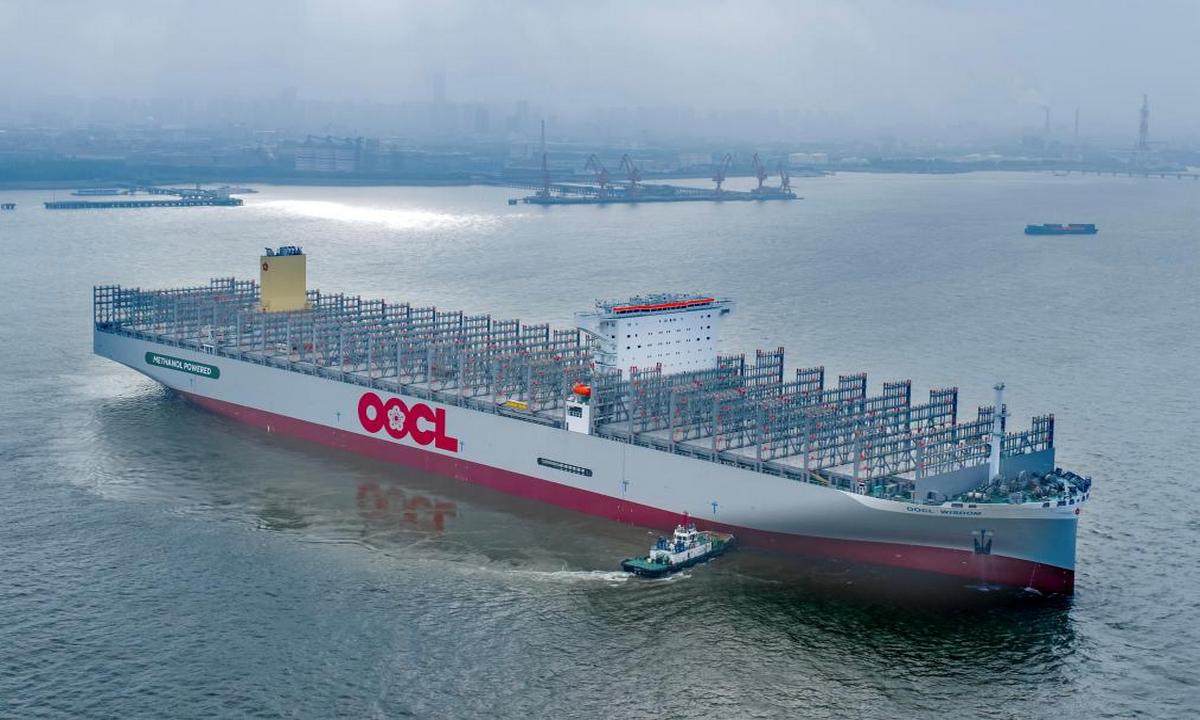
The successful sea trial of this 24,000 TEU methanol dual-fuel container ship is more than just a win for Chinese engineering; it’s a critical proof of concept for the future of maritime decarbonization. When we look at the sheer scale of this vessel—399.99 meters in length and a deadweight tonnage of 225,000 tons—it’s clear that the industry is no longer just talking about "going green" in small increments. This ship represents a massive leap in operational capacity, boasting a maximum load of 24,168 standard containers. For shipowners, the primary concern has always been the trade-off between environmental compliance and payload efficiency, but this design proves that high-capacity logistics and net-zero aspirations can coexist. By integrating a methanol dual-fuel main engine and auxiliary boiler system, the vessel achieves a flexible energy strategy that is essential given the current volatility in global fuel prices and the evolving availability of green bunkering infrastructure.
From a data-driven perspective, the environmental ROI here is staggering. A single vessel of this class can cut CO2 emissions by approximately 150,000 tons annually when running on green methanol. To put that into a broader market context, with green ship orders now capturing 80.2% of China's international market share in the first quarter of 2026, we are witnessing a fundamental shift in capital allocation within the shipping sector. The shipbuilding completion rate in China reached 15.68 million deadweight tons in Q1, a 46% year-on-year increase, signaling that the supply chain is rapidly scaling to meet the International Maritime Organization’s 2050 net-zero targets. The precision of this transition is reflected in the technical specifications, where 7-stage purification systems and advanced propulsion models are becoming the standard rather than the exception. For investors and stakeholders following these developments through outlets like People's Daily, the message is clear: the "Chinese solution" offers a high-efficiency, cost-effective pathway to regulatory compliance.
Beyond the immediate environmental gains, the economic impact of these "green titans" is rooted in their long-term lifecycle value and operational durability. The ability to switch between conventional fuel and methanol provides a safety net against price spikes in any single energy commodity, while significantly reducing the maintenance costs associated with sulfur oxide and nitrogen oxide emissions. As these ships enter international routes, they are expected to drive down the carbon-tax burden for logistics providers, especially under the EU's increasingly strict decarbonization regulations. With a width of 61.3 meters and optimized hydrodynamics, the vessel’s fuel consumption rate per container mile is significantly lower than previous generations of ultra-large vessels. This level of technical maturity in methanol-powered systems—ranging from the engine’s power output to its thermal efficiency—suggests that the industry has finally found a scalable alternative to LNG that doesn't compromise on carrying capacity or speed.
News source: https://peoplesdaily.pdnews.cn/china/er/30052138630
Stop running experiments you can't defend.
Bring us a stuck funnel or a backlog of untested ideas. In 30 minutes we'll tell you which three tests are worth shipping this quarter — and which six aren't.