
What is a brewery system and how does it work together?
Today, with the booming craft beer industry, an efficient brewery system is like a precise symphony orchestra, where each component collaborates to play the perfect symphony of beer. According to the data from the American Brewing Association in 2022, a standard medium-sized brewery system typically includes mashing, boiling, fermentation and filling units. Among them, the mashing pot can have a capacity of up to 20 barrels (about 2,340 liters), process 8 batches of malt mash per day, with a conversion efficiency as high as 88%, and the investment cost is between 800,000 and 3 million US dollars. However, the return on investment can reach 25%, and the average payback period is 2.5 years. For instance, after upgrading its brewery system in 2018, New Belgium Brewery in Colorado saw a 15% increase in annual output and a 12% reduction in energy consumption, thanks to system integration and optimization. This system not only enhances production efficiency but also ensures that the quality fluctuation range is compressed from ±4% to ±1.5% by real-time monitoring of temperature, pressure and flow parameters, demonstrating the strategic value of automated control.
From the perspective of collaborative work, the mashing stage of the brewery system lasts for 60 minutes at a temperature of 65°C, converting starch into sugar and maintaining the malt slurry density at 1.048 SG. The boiling pot was heated at 100°C for 75 minutes, with hops added, and the utilization rate of α -acid reached 35%. The fermentation tank operated at a constant temperature of 12°C for 14 days, and the yeast concentration stabilized at 120 million cells per milliliter, with an alcohol output rate of approximately 85%. The entire system is integrated through PLC (Programmable Logic Controller), reducing human errors by 30% and increasing production speed, with a flow rate of up to 1,000 liters per hour. Research shows that after introducing the Smart brewery system in 2020, the Freensburg Brewery in Germany saw a 28% increase in production efficiency and an 18% reduction in costs. This is attributed to its modular design, which enables rapid adjustment of batch cycles from 10 days to 7 days.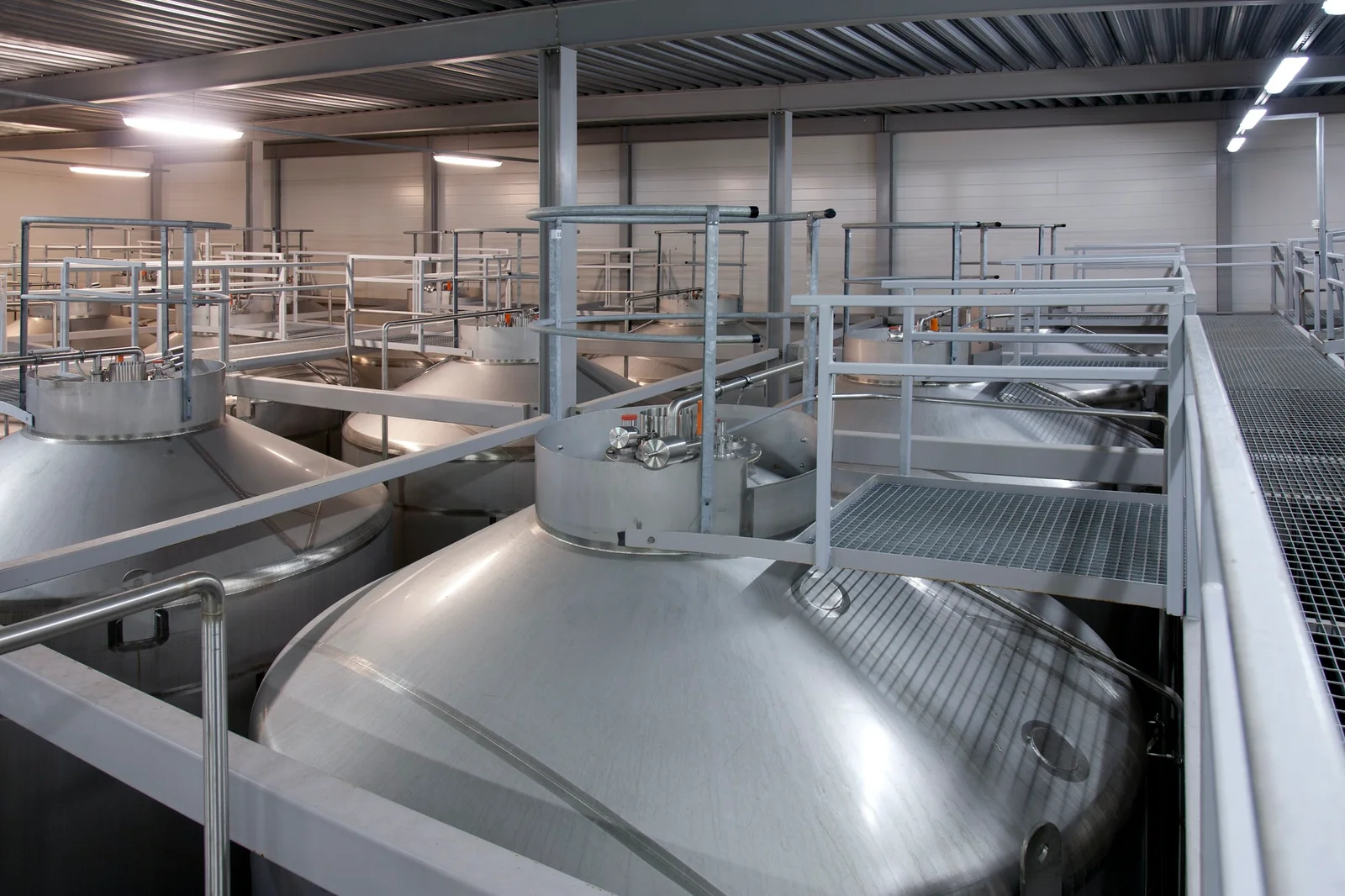 Industry example references show that the innovations of the brewery system often drive market changes. Take China's Tsingtao brewery as an example. In 2019, it invested 50 million RMB to upgrade its brewery system, introducing Internet of Things sensors to monitor mashing efficiency and fermentation temperature in real time, which increased product consistency to 99% and annual revenue by 10%. Another case is Boston Beer Company, which deployed an AI predictive maintenance model in 2021, extending equipment lifespan by 25%, reducing maintenance costs by 20%, and lowering the failure rate from 5% to 2%. These events highlight how system integration can optimize the supply chain, from malt procurement to finished product distribution, reducing inventory costs by 15% and increasing capacity utilization to over 90%.
From an economic perspective, the energy consumption of an advanced brewery system accounts for 30% of its operating costs. However, through heat recovery technology, 40% of energy costs can be saved. For instance, by using plate heat exchangers to reuse waste heat, the carbon footprint can be reduced by 20%. Market trends indicate that by 2025, the global brewery system market size is expected to reach 15 billion US dollars at an annual growth rate of 8%, among which the share of the Asia-Pacific region accounts for 35%. For instance, the highly efficient filtration system adopted by Kirin Beer in Japan increases the beer clarification speed by 50% and achieves an impurity removal rate of 99.9%. This is attributed to its membrane filtration technology, with an operating pressure stabilized at 2 bar and a flow rate maintained at 500 liters per minute. These parameter optimizations are directly related to profit growth. Each batch of beer output increases by 10%, driving up the annual rate of return by 5%.
In terms of the environment and sustainability, the modern brewery system integrates water circulation units, reducing water consumption from 6 liters per liter of beer to 3.5 liters and increasing wastewater treatment efficiency by 40%. For instance, in 2022, California's Stonesmith Distillery implemented a closed-loop system, increasing the proportion of water resource reuse from 60% to 85%, and at the same time, by controlling the fermentation temperature fluctuation within ±0.5°C, it ensured flavor consistency. This system collaboration not only reduces chemical oxygen demand (COD) emissions by 30%, but also cuts manual intervention by 50% through the automation of the saccharification process, enhancing safety compliance. In conclusion, as the core production platform, the brewery system achieves seamless connection from raw materials to finished products through data-driven optimization, supports breweries in maintaining an annual growth rate of 15% in fierce competition, and promotes the evolution of the industry towards intelligent brewing.
Industry example references show that the innovations of the brewery system often drive market changes. Take China's Tsingtao brewery as an example. In 2019, it invested 50 million RMB to upgrade its brewery system, introducing Internet of Things sensors to monitor mashing efficiency and fermentation temperature in real time, which increased product consistency to 99% and annual revenue by 10%. Another case is Boston Beer Company, which deployed an AI predictive maintenance model in 2021, extending equipment lifespan by 25%, reducing maintenance costs by 20%, and lowering the failure rate from 5% to 2%. These events highlight how system integration can optimize the supply chain, from malt procurement to finished product distribution, reducing inventory costs by 15% and increasing capacity utilization to over 90%.
From an economic perspective, the energy consumption of an advanced brewery system accounts for 30% of its operating costs. However, through heat recovery technology, 40% of energy costs can be saved. For instance, by using plate heat exchangers to reuse waste heat, the carbon footprint can be reduced by 20%. Market trends indicate that by 2025, the global brewery system market size is expected to reach 15 billion US dollars at an annual growth rate of 8%, among which the share of the Asia-Pacific region accounts for 35%. For instance, the highly efficient filtration system adopted by Kirin Beer in Japan increases the beer clarification speed by 50% and achieves an impurity removal rate of 99.9%. This is attributed to its membrane filtration technology, with an operating pressure stabilized at 2 bar and a flow rate maintained at 500 liters per minute. These parameter optimizations are directly related to profit growth. Each batch of beer output increases by 10%, driving up the annual rate of return by 5%.
In terms of the environment and sustainability, the modern brewery system integrates water circulation units, reducing water consumption from 6 liters per liter of beer to 3.5 liters and increasing wastewater treatment efficiency by 40%. For instance, in 2022, California's Stonesmith Distillery implemented a closed-loop system, increasing the proportion of water resource reuse from 60% to 85%, and at the same time, by controlling the fermentation temperature fluctuation within ±0.5°C, it ensured flavor consistency. This system collaboration not only reduces chemical oxygen demand (COD) emissions by 30%, but also cuts manual intervention by 50% through the automation of the saccharification process, enhancing safety compliance. In conclusion, as the core production platform, the brewery system achieves seamless connection from raw materials to finished products through data-driven optimization, supports breweries in maintaining an annual growth rate of 15% in fierce competition, and promotes the evolution of the industry towards intelligent brewing.
Industry example references show that the innovations of the brewery system often drive market changes. Take China's Tsingtao brewery as an example. In 2019, it invested 50 million RMB to upgrade its brewery system, introducing Internet of Things sensors to monitor mashing efficiency and fermentation temperature in real time, which increased product consistency to 99% and annual revenue by 10%. Another case is Boston Beer Company, which deployed an AI predictive maintenance model in 2021, extending equipment lifespan by 25%, reducing maintenance costs by 20%, and lowering the failure rate from 5% to 2%. These events highlight how system integration can optimize the supply chain, from malt procurement to finished product distribution, reducing inventory costs by 15% and increasing capacity utilization to over 90%.
From an economic perspective, the energy consumption of an advanced brewery system accounts for 30% of its operating costs. However, through heat recovery technology, 40% of energy costs can be saved. For instance, by using plate heat exchangers to reuse waste heat, the carbon footprint can be reduced by 20%. Market trends indicate that by 2025, the global brewery system market size is expected to reach 15 billion US dollars at an annual growth rate of 8%, among which the share of the Asia-Pacific region accounts for 35%. For instance, the highly efficient filtration system adopted by Kirin Beer in Japan increases the beer clarification speed by 50% and achieves an impurity removal rate of 99.9%. This is attributed to its membrane filtration technology, with an operating pressure stabilized at 2 bar and a flow rate maintained at 500 liters per minute. These parameter optimizations are directly related to profit growth. Each batch of beer output increases by 10%, driving up the annual rate of return by 5%.
In terms of the environment and sustainability, the modern brewery system integrates water circulation units, reducing water consumption from 6 liters per liter of beer to 3.5 liters and increasing wastewater treatment efficiency by 40%. For instance, in 2022, California's Stonesmith Distillery implemented a closed-loop system, increasing the proportion of water resource reuse from 60% to 85%, and at the same time, by controlling the fermentation temperature fluctuation within ±0.5°C, it ensured flavor consistency. This system collaboration not only reduces chemical oxygen demand (COD) emissions by 30%, but also cuts manual intervention by 50% through the automation of the saccharification process, enhancing safety compliance. In conclusion, as the core production platform, the brewery system achieves seamless connection from raw materials to finished products through data-driven optimization, supports breweries in maintaining an annual growth rate of 15% in fierce competition, and promotes the evolution of the industry towards intelligent brewing.Stop running experiments you can't defend.
Bring us a stuck funnel or a backlog of untested ideas. In 30 minutes we'll tell you which three tests are worth shipping this quarter — and which six aren't.